
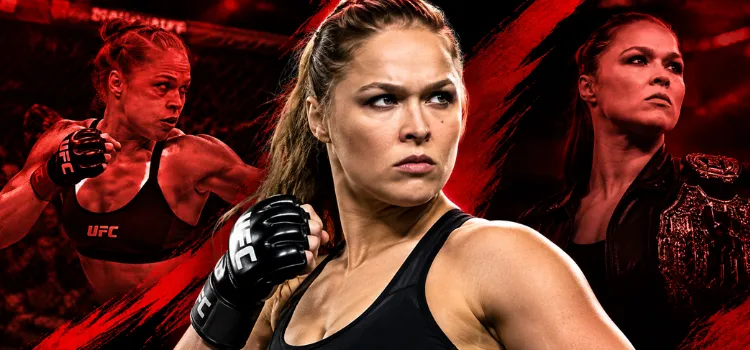


ELITE COMBATANTS
UFC FIGHTERS
Dive deep into the profiles, fighting styles, and statistical dominance of the athletes who step into the Octagon. Discover the men and women who have forged the landscape of modern mixed martial arts.
VIEW FIGHTER ROSTER →
The Evolution of the UFC Fighter: From Brawlers to Ultimate Martial Artists
To truly understand the phenomenon of the modern Ultimate Fighting Championship (UFC), one must first examine the lifeblood of the organization: the fighters themselves. Stepping into the Octagon requires a unique combination of physical prowess, psychological fortitude, and tactical genius that separates mixed martial artists from every other type of athlete on the planet. A UFC fighter is not merely a boxer, a wrestler, or a martial arts practitioner—they are a weaponized hybrid of human capability.
The journey from the inception of the UFC in 1993 to the globally televised, multi-billion-dollar sporting spectacle of 2026 is etched in the blood, sweat, and fractured bones of its competitors. Over three decades, the archetype of the "UFC Fighter" has evolved so drastically that the pioneers of the sport would scarcely recognize the chess match of modern combat.
In this massive, comprehensive deep-dive, we will chronicle the fascinating evolution of UFC fighters, the distinct eras of fighting styles, the legendary figures who defined generations, and what it truly takes to survive and conquer inside the eight-sided cage.
The Dark Ages: Single-Discipline Specialists (1993 - 1999)
When UFC 1 was broadcast from the McNichols Sports Arena in Denver, the premise was beautifully simple, yet brutally chaotic: "Which martial art is the most effective in a real fight?" There were no weight classes, no gloves, no time limits, and essentially no rules—save for bans on biting and eye-gouging. The fighters who entered this tournament were pure, single-discipline specialists.
The Gracie Jiu-Jitsu Revelation
The world was introduced to a slender Brazilian named Royce Gracie. While monstrous kickboxers, sumo wrestlers, and karate masters threw wild, unregulated strikes, Gracie calmly took his opponents to the ground. Using leverage, joint locks, and chokes, Royce submitted men who outweighed him by over 50 pounds. He won three of the first four UFC tournaments, proving definitively that grappling—specifically Brazilian Jiu-Jitsu (BJJ)—was the most critical component of unarmed combat.
The Wrestlers Strike Back
It didn't take long for elite wrestlers to realize they could neutralize BJJ practitioners. Fighters like Mark Coleman (the "Godfather of Ground-and-Pound"), Dan Severn, and Kevin Randleman brought world-class collegiate and Olympic wrestling to the Octagon. Their strategy was simple: secure a powerful takedown, maintain top position, and deliver devastating strikes until the opponent quit or the referee intervened. This era proved that while BJJ was deadly, an elite wrestler who understood submission defense could dictate entirely where the fight took place.
The Golden Era: The Rise of Cross-Training (2000 - 2008)
As the new millennium dawned, the UFC faced intense political backlash, leading to the creation of the Unified Rules of Mixed Martial Arts. With the introduction of weight classes, rounds, and mandatory gloves, the sport was legitimized. The fighters evolved in tandem. It was no longer enough to be a master of one art; to be a UFC fighter, you had to cross-train.
The Birth of "Sprawl and Brawl"
Fighters realized that to utilize their striking, they had to avoid being taken down. This gave birth to the "Sprawl and Brawl" style. Chuck Liddell was the poster child for this era. He possessed elite collegiate wrestling defense, but instead of taking opponents down, he used it strictly to keep the fight on his feet. Once standing, his lethal Kempo Karate and kickboxing resulted in a string of spectacular knockout victories that captivated the American audience.
The Couture and Hughes Blueprints
Simultaneously, athletes like Randy Couture and Matt Hughes were showcasing how to blend Greco-Roman clinch work with dirty boxing. Couture, affectionately known as "Captain America," would pin opponents against the newly designed Octagon fence, neutralizing their power while wearing them down with short, exhausting strikes. This era required fighters to be athletes first and martial artists second, demanding grueling cardio conditioning to survive five five-minute rounds.
The Matrix Era: Precision and Perfection
While Americans focused on wrestling and heavy hands, a Brazilian fighter emerged who would elevate UFC striking to an entirely different dimension. Anderson "The Spider" Silva debuted in 2006 and immediately shattered the existing paradigms of fighting.
Silva fought with his hands down, utilizing head movement that seemed to defy the laws of physics. He incorporated traditional Muay Thai plumes (clinch), devastating knees, and pinpoint accurate counter-striking. For seven years, he was untouchable. His legendary front-kick knockout of Vitor Belfort at UFC 126 was not just a victory; it was a cultural moment that forced every fighter in the world to re-evaluate their striking arsenal.
| Era Pioneer | Primary Fighting Style | Key Contribution to MMA |
|---|---|---|
| Royce Gracie | Brazilian Jiu-Jitsu | Proved the absolute necessity of ground grappling. |
| Mark Coleman | Freestyle Wrestling | Invented the "Ground-and-Pound" technique. |
| Chuck Liddell | Kempo / Kickboxing | Popularized "Sprawl and Brawl" (anti-wrestling striking). |
| Anderson Silva | Muay Thai | Introduced elusive, matrix-like counter-striking and accuracy. |
| Georges St-Pierre | Kyokushin / Wrestling | The first truly seamless "Mixed" Martial Artist. |
The Modern Gladiator: The Complete Martial Artist (2010s - 2026)
If the early days were about discovering which martial art was best, the modern era is about mastering them all. A UFC fighter debuting in 2026 cannot afford a single hole in their game. A world-class kickboxer will be submitted in 60 seconds if they lack takedown defense. A world-class BJJ black belt will be knocked out if they cannot close the distance with striking.
The Jon Jones Anomaly
Jon Jones represents the perfect storm of genetics, fight IQ, and ruthless creativity. Arriving at a time when the light heavyweight division was filled with aging legends, Jones introduced techniques rarely seen in the Octagon: oblique kicks to the knees, spinning back elbows, and devastating elbows from the guard. He blended collegiate wrestling with an improvisational striking style that made him the youngest champion in UFC history and a perennial pound-for-pound king.
The Dagestani Wrestling Takeover
In the mid-2010s, a quiet, stoic fighter from the mountains of Dagestan named Khabib Nurmagomedov began terrorizing the lightweight division. Khabib introduced a style of chain-wrestling and "cage-walking" that the West had no answer for. Instead of traditional double-leg takedowns, Dagestani fighters utilized Combat Sambo, controlling their opponents' wrists, trapping their legs, and delivering suffocating top pressure.
This lineage continued perfectly with Islam Makhachev, who took Khabib’s blueprint and added elite, southpaw kickboxing to it. The Dagestani style has become the most feared meta in modern MMA, forcing American and Brazilian gyms to completely restructure their grappling curricula.
The Striker’s Renaissance: Adesanya and Volkanovski
To counter the rise of elite wrestling, a new breed of strikers emerged, relying on feints, distance management, and calf kicks. Israel Adesanya, a former Glory Kickboxing star, brought a level of striking defense to the middleweight division that allowed him to pick apart elite wrestlers. Similarly, Alexander Volkanovski at featherweight demonstrated how mixing rugby-level cardio, boxing feints, and low kicks could completely shut down taller, longer opponents.
The Heavyweight Evolution: Gane and Aspinall
Historically, heavyweights relied on one-punch knockout power. Today, fighters like Ciryl Gane and Tom Aspinall move like middleweights. They bounce on their toes, throw question-mark kicks, and execute slick submissions. The era of the slow, plodding heavyweight brawler is definitively over; the modern 265-pound fighter is a highly conditioned, dynamic athlete.
The McGregor Cultural Phenomenon
While assessing the history of UFC fighters, the impact of Conor McGregor transcends fighting styles. McGregor changed the *business* of being a UFC fighter. Arriving from Ireland with exceptional boxing, a devastating left cross, and unparalleled trash talk, McGregor turned the sport into a mainstream pop-culture obsession.
By knocking out José Aldo in 13 seconds and later defeating Eddie Alvarez to become the UFC's first simultaneous double-champion ("Champ-Champ"), McGregor proved that the microphone was just as important as the mouthguard. He commanded unprecedented paydays, paving the way for future fighters to treat their careers as brands. His crossover boxing match with Floyd Mayweather generated hundreds of millions of dollars, forever altering the financial ceiling for combat sports athletes.
| Fighter | Nickname | Weight Class | Legacy / Achievement |
|---|---|---|---|
| Conor McGregor | The Notorious | Feather/Light/Welter | First simultaneous two-division champion. |
| Jon Jones | Bones | Light Heavy / Heavy | Youngest champion, most title wins (16). |
| Khabib Nurmagomedov | The Eagle | Lightweight | Undefeated (29-0), absolute grappling dominance. |
| Georges St-Pierre | Rush (GSP) | Welter / Middle | Avenged all career losses, 9 straight title defenses. |
| Demetrious Johnson | Mighty Mouse | Flyweight | UFC record 11 consecutive title defenses. |
Women in the UFC: Shattering the Glass Ceiling
For a significant portion of its history, the UFC was a men-only organization. Dana White famously declared that women would never fight in the Octagon. However, the sheer star power and judo dominance of Ronda Rousey forced a historic pivot. In 2013, Rousey became the first female UFC fighter and champion.
Rousey’s dominance (finishing most of her early opponents via first-round armbar) proved that women's MMA could headline pay-per-views and draw millions of fans. As the sport evolved, so did the athletes. Amanda Nunes, known as "The Lioness," violently dismantled Rousey, Cris Cyborg, and Holly Holm, becoming a double-champion and the undisputed greatest female fighter in history.
Today, fighters like Zhang Weili, Valentina Shevchenko, and Kayla Harrison showcase a level of technical proficiency—from spinning kicks to elite judo tosses—that rivals any male division in the organization. The women's bracket has grown from a single weight class to four highly competitive divisions.
The Anatomy and Lifestyle of a UFC Fighter
What goes into the creation of a modern UFC fighter? The reality of the profession is a grueling, year-round commitment that pushes the human body and mind to the absolute brink.
The Fight Camp
A standard UFC "fight camp" lasts between 8 to 12 weeks. During this time, a fighter trains 2 to 3 times a day, 6 days a week. Sessions are split between pad work (striking), grappling (BJJ/Wrestling), sparring (live combat simulation), and strength/conditioning. Teams are meticulously structured, consisting of a head coach, a striking coach, a grappling coach, a nutritionist, and sports psychologists.
The Brutality of Weight Cutting
Perhaps the most dangerous aspect of being a UFC fighter takes place before they even step into the cage: the weight cut. To gain a size advantage, fighters routinely cut between 15 to 30 pounds in the weeks leading up to weigh-ins. This process involves strict dieting followed by extreme dehydration techniques (saunas, sweat suits, hot baths) in the final 48 hours. Once they hit the scale, they have approximately 36 hours to rehydrate and replenish their bodies before the fight.
Fight IQ and Analytics
In 2026, raw toughness is no longer enough. The modern UFC fighter operates with "Fight IQ." Teams study hundreds of hours of tape on opponents to identify micro-habits—does he drop his left hand when he kicks? Does she circle to the right when pressured? Analytics play a massive role, with coaches tracking striking volume, takedown success rates, and cardio drop-offs in championship rounds to craft a flawless game plan.
Frequently Asked Questions About UFC Fighters
How much do UFC fighters get paid?
Fighter pay is structured in tiers. Entry-level fighters typically make a base pay of $10,000 to $12,000 to show, and an equal amount as a win bonus. Mid-tier fighters earn between $50,000 and $150,000 per fight. Champions and superstars earn millions, taking home a percentage of the Pay-Per-View (PPV) buys. The promotion also awards $50,000 "Performance of the Night" bonuses.
How does someone become a UFC fighter?
There is no direct tryout for the UFC. Athletes must build a strong professional MMA record (usually 8-0 or better) in regional promotions like LFA, Cage Warriors, or Invicta FC. UFC scouts actively monitor these promotions. Many fighters are signed through Dana White's Contender Series (DWCS) or reality shows like The Ultimate Fighter (TUF).
What is the Pound-for-Pound (P4P) list?
The Pound-for-Pound ranking is a theoretical list determined by a voting panel of media members. It asks the question: "If all fighters were the exact same weight and size, who would be the best based on pure skill and dominance?" Fighters like Jon Jones and Islam Makhachev frequently top this list.
Do UFC fighters have to drug test?
Yes. The UFC employs an incredibly strict, year-round, random drug-testing program currently managed by Combat Sports Anti-Doping (CSAD). Fighters must provide their whereabouts at all times and can be blood or urine-tested globally, 365 days a year, for performance-enhancing drugs (PEDs).
How long is a standard UFC fighter's career?
The average peak career span for a UFC fighter is between 5 to 8 years. However, factors like the weight class play a role. Lighter weight classes (Flyweight, Bantamweight) rely heavily on speed, meaning fighters often decline in their early 30s. Heavyweights, relying more on power, routinely fight at an elite level well into their late 30s or even 40s.
Conclusion: The Ultimate Legacy
To be a UFC fighter is to choose a life of extraordinary sacrifice. It is a profession where mistakes are punished immediately and violently. Yet, for those who reach the apex, the glory is immortal. From the gritty, bare-knuckle brawlers of 1993 to the elite, multi-millionaire tactical athletes of 2026, the UFC fighter remains the purest embodiment of human combat.
As the sport continues to grow, integrating new martial arts, advanced sports science, and global talent pools, the athletes will only become faster, stronger, and more technical. The Octagon is a merciless forge, but the diamonds it produces are legends that will be remembered for generations.