CURRENT CHAMPION
CIRYL GANE
The undisputed king of the heavyweight division. Explore the phenomenal striking, agility, and the unprecedented journey that cemented Ciryl Gane's legacy at the absolute pinnacle of combat sports.
VIEW FIGHTER STATS →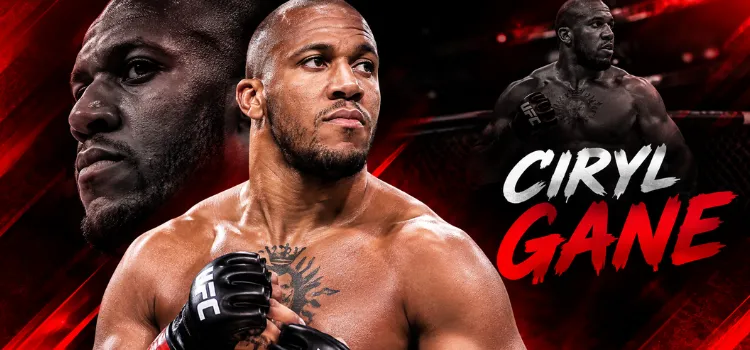
THE ULTIMATE PRIZE
EVOLUTION OF THE BELT
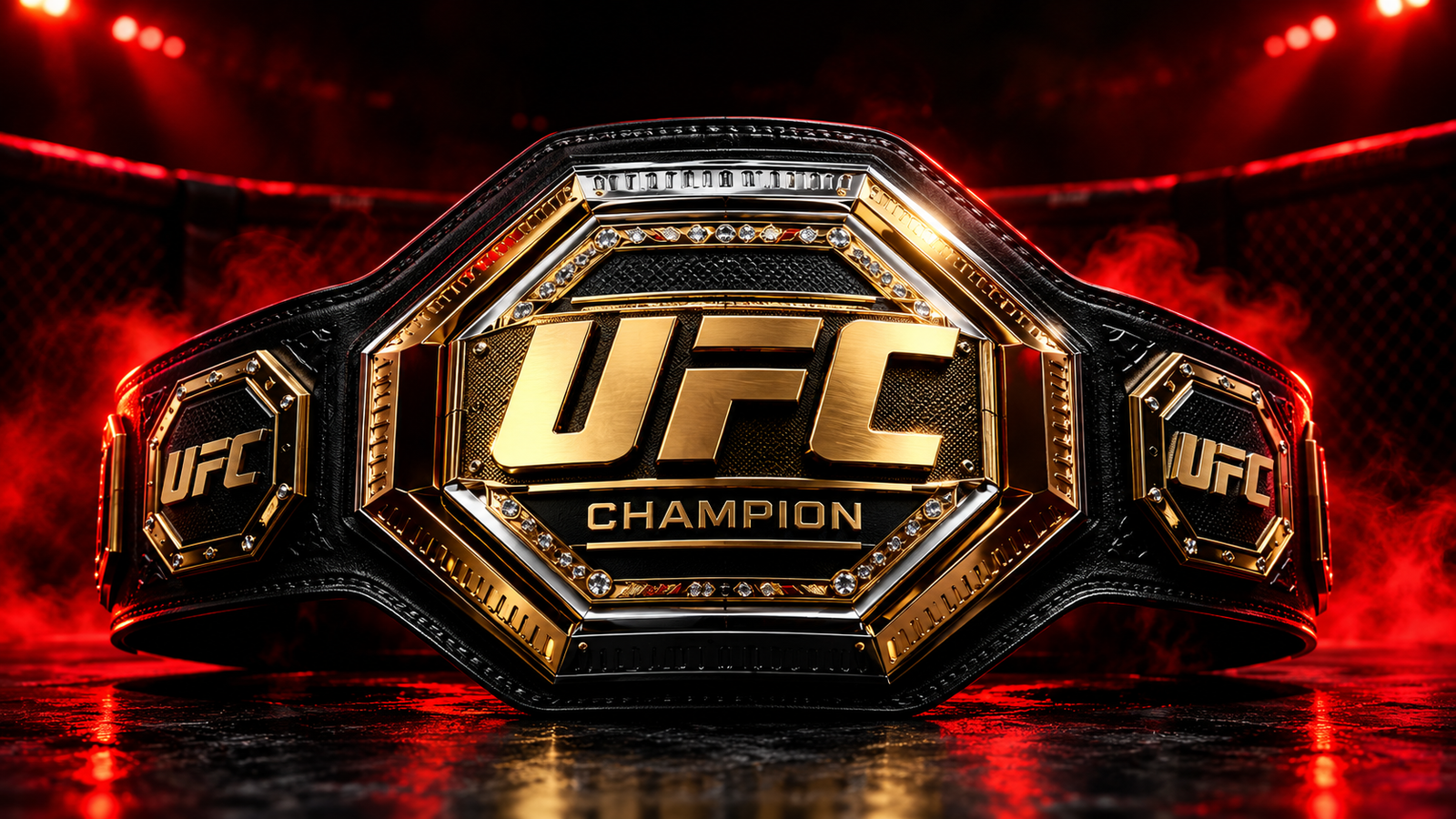
The physical UFC belt has undergone significant transformations since the early 90s. In the beginning, the belt was a simple, rudimentary gold plate on black leather. During the Zuffa boom era (post-2001), the UFC introduced the iconic "Classic Belt," featuring a large, highly detailed gold and silver octagon plate. Fighters would receive a brand new physical belt every single time they successfully defended their title.
In 2019, the UFC revolutionized this tradition by unveiling the sleek "UFC Legacy Championship Belt." Today, a champion receives only one physical belt. For every title defense, a unique ruby is embedded into the side plates, symbolizing their continued dominance. The modern belt is highly customized, featuring the fighter's name, weight class, and home country flag.
The Blood, Gold, and Glory: A Complete History of UFC Champions
When the eight-sided cage first had its doors locked in Denver, Colorado, in November 1993, the concept of a "champion" was vastly different from what it is today. There were no weight classes, no rounds, no judges, and certainly no shiny gold belts strapped around waists. The ultimate prize was survival, respect, and a symbolic tournament victory. Fast forward to today, and the Ultimate Fighting Championship (UFC) belt is arguably the most coveted piece of hardware in global sports. It represents the absolute pinnacle of human physical capability, martial arts mastery, and sheer willpower.
The history of UFC champions is not just a chronological list of names; it is the history of mixed martial arts itself. It is a story of evolution—from one-dimensional specialists like purely Brazilian Jiu-Jitsu practitioners and rugged collegiate wrestlers to the modern-day gladiators who blend Muay Thai, wrestling, boxing, and submission grappling into a seamless, terrifying weapon.
In this comprehensive, definitive guide, we will journey through the annals of the Octagon. We will explore the genesis of the championship titles, the creation of weight classes, the legends who built the divisions, the modern undisputed kings, and the records that stand as monuments to greatness.
The Genesis: From Tournament Winners to Divisional Kings
Before the UFC introduced standard weight classes, the promotion relied strictly on a tournament format. Fighters would battle multiple times in a single night. Legends like Royce Gracie, Ken Shamrock, Dan Severn, and Mark Coleman carved their names into the early Mount Rushmore of the sport by enduring these grueling one-night gauntlets. However, as the sport faced political pressure and evolved toward athletic legitimacy, the need for standardized divisions became paramount.
The first true "Championship" bout took place at UFC 9 in 1996 when Ken Shamrock and Dan Severn fought for the "UFC Superfight Championship." This was the precursor to the modern title system. By 1997, at UFC 12, the promotion officially introduced weight classes: Heavyweight (over 200 lbs) and Lightweight (under 200 lbs, which would later be renamed). Mark Coleman became the first-ever UFC Heavyweight Champion by defeating Dan Severn via submission.
The Heavyweight Division: The Baddest Men on the Planet
The Heavyweight division has always possessed a unique mystique. The inherent danger of fighting men who weigh up to 265 pounds means that one punch can end a legacy in a fraction of a second. Consequently, title defenses in this division have historically been the hardest to string together.
The Early Giants and the Couture Era
Following Mark Coleman, the division saw a carousel of devastating punchers and grapplers. Maurice Smith, Kevin Randleman, and Bas Rutten all held the strap. However, it was Randy "The Natural" Couture who brought a tactical, Greco-Roman wrestling approach that redefined heavyweight strategy. Couture’s reigns were iconic, defeating much larger men through sheer cardiovascular endurance and dirty boxing.
The Lesnar Spectacle and the Miocic Reign
The arrival of Brock Lesnar brought unprecedented mainstream attention to the heavyweight division. Lesnar, a physical anomaly and former professional wrestler, captured the title by defeating Randy Couture, proving that elite wrestling combined with terrifying size was a cheat code. His rivalry with Frank Mir and Shane Carwin generated astronomical pay-per-view numbers.
However, the modern era belongs to Stipe Miocic. A golden gloves boxer and NCAA Division I wrestler, Miocic holds the record for the most consecutive title defenses in heavyweight history (three). His trilogies against Daniel Cormier and his tactical dismantling of Francis Ngannou cemented him as the greatest heavyweight of his generation.
The Ngannou Power, Jones’ Arrival, and Gane’s Masterclass
Francis Ngannou’s reign brought an aura of absolute terror back to the division, possessing arguably the hardest recorded punch in human history. Following Ngannou's departure, the legendary Jon Jones moved up to capture the vacant heavyweight crown, asserting his claim as the greatest martial artist breathing.
But the wheel turns rapidly in the heavyweight division. Ciryl Gane, possessing the footwork of a middleweight and the tactical precision of a kickboxer, evolved his grappling and seized the undisputed crown. As of 2026, Gane stands at the top of the mountain, having navigated through the most chaotic and talent-rich era the heavyweight division has ever seen.
The Light Heavyweight Division (205 lbs): The Marquee Weight Class
For a long time, the 205-pound division was the UFC's crown jewel. It was the division that birthed the first true superstars of the modern era and delivered rivalries that saved the company from bankruptcy.
The Ortiz vs. Liddell Golden Age
Tito Ortiz became the face of the UFC during its darkest financial days, defending the light heavyweight title a then-record five times. His brash persona was the perfect foil for the silent, devastating knockout artist, Chuck Liddell. When Liddell finally captured the belt, his "Sprawl and Brawl" style—keeping fights on the feet to land his vicious overhand right—became the template for a new generation of fighters.
The Machida Era and the Shogun Enigma
The division transitioned into a highly technical phase with Lyoto Machida, whose elusive Karate style seemed unsolvable, giving birth to the phrase "The Machida Era." However, Mauricio "Shogun" Rua violently ended that era, only to lose the belt shortly after to a young prodigy who would cast a long, unbreakable shadow over 205 pounds.
Jon Jones: The Unbreakable Reign
At 23 years old, Jon Jones destroyed Shogun Rua to become the youngest champion in UFC history. Jones did not just beat the previous generation of legends; he dismantled them. Rampage Jackson, Lyoto Machida, Rashad Evans, Vitor Belfort, and Chael Sonnen all fell to Jones's revolutionary use of reach, wrestling, and dynamic striking. Despite out-of-the-cage controversies that saw him stripped of the title multiple times, inside the cage, Jones remained virtually undefeated at light heavyweight for over a decade.
The Modern Resurgence: Pereira and Ulberg
Post-Jon Jones, the division became a volatile warzone. Jan Błachowicz, Glover Teixeira, and Jiří Procházka all briefly held the gold. Alex Pereira brought his terrifying kickboxing pedigree to capture the title, adding to his legendary two-division status. Following Pereira's heavyweight ambitions, Carlos Ulberg rose through the ranks with a ten-fight win streak, capturing the gold with phenomenal counter-striking and establishing himself as the new king of 205.
The Middleweight Division (185 lbs): Precision and Violence
The history of the middleweight division is defined by one man's era of absolute dominance, followed by a frantic struggle for power that continues to this day.
The Spider’s Web
Anderson "The Spider" Silva is synonymous with the middleweight division. From 2006 to 2013, Silva went on a 16-fight win streak, defending his title 10 consecutive times. Silva didn't just win; he embarrassed world-class fighters, dropping his hands, dodging punches like the Matrix, and delivering highlight-reel knockouts (like his front kick against Vitor Belfort). He elevated MMA striking to an art form.
The Kingslayers: Weidman, Whittaker, and Adesanya
Chris Weidman shocked the world by knocking out Silva, ushering in a brief era of elite wrestlers controlling the division. Luke Rockhold and Robert Whittaker followed, fighting through absolute wars to hold the gold.
Then arrived Israel Adesanya. "The Last Stylebender" brought an elite kickboxing pedigree reminiscent of Silva but with modern defensive wrestling. Adesanya cleared out the division, beating Whittaker, Romero, Costa, and Vettori. His fierce rivalry with Alex Pereira became the defining storyline of the division.
The Strickland Paradigm
In one of the biggest upsets in UFC history, Sean Strickland utilized a flawless defensive guard, a piston-like jab, and relentless forward pressure to dethrone Adesanya. Strickland's unique style—eschewing flashy kicks for gritty, fundamental boxing and unbreakable cardio—has forced the entire division to rethink its approach to striking.
The Welterweight Division (170 lbs): The Grind and the Glory
Welterweight has historically been the most grueling division in the UFC, requiring fighters to possess elite cardio, dominant wrestling, and technical striking.
Hughes and the St-Pierre Mastery
Matt Hughes was the original welterweight king, using farm-boy strength and relentless ground-and-pound to dominate the early 2000s. However, he was eventually surpassed by Georges St-Pierre (GSP). GSP represents the evolution of the complete mixed martial artist. After a shocking upset loss to Matt Serra, GSP returned to avenge his defeat and went on a run of 9 consecutive title defenses. GSP's ability to perfectly mix his jab with explosive double-leg takedowns made him practically unbeatable.
The Usman Dominance to the Makhachev Takeover
Following GSP’s retirement, Robbie Lawler and Tyron Woodley held the mantle, but it was Kamaru Usman who brought a level of dominance that drew comparisons to GSP. Usman’s elite wrestling and devastating right hand allowed him to clear out the division until a last-minute, historic head-kick by Leon Edwards changed everything.
Today, Islam Makhachev holds the welterweight gold. Having already dominated the lightweight division, Makhachev moved up to 170 pounds and proved that Dagestani Sambo translates perfectly against larger men. Makhachev’s current 17-fight win streak and status as a double-champ place him firmly in the conversation for the greatest pound-for-pound fighter of all time.
The Lightweight Division (155 lbs): The Shark Tank
Widely considered the deepest, most dangerous division in the UFC, breaking into the top 10 at lightweight is harder than winning a title in some other weight classes.
The Prodigy and The Answer
BJ Penn, "The Prodigy," brought elite Brazilian Jiu-Jitsu and crisp boxing to the division, becoming one of its most dominant early champions. He was eventually unseated by Frankie Edgar, whose footwork, wrestling, and massive heart proved that size isn't everything.
The Era of the Eagle
No history of the lightweight division can be written without dedicating a chapter to Khabib Nurmagomedov. Retiring with a flawless 29-0 record, Khabib's grappling pressure was an insurmountable force of nature. He famously declared he would "smash your boy," and he did exactly that to Conor McGregor, Dustin Poirier, and Justin Gaethje before laying his gloves on the canvas in a deeply emotional retirement.
Oliveira's Heart to Gaethje's Violence
Charles Oliveira took the vacant throne, setting records for the most finishes and submissions in UFC history while providing fans with the most thrilling, near-death title defenses ever seen. After Makhachev moved up, the lightweight crown became fiercely contested again.
In 2026, Justin Gaethje stands as the king of 155. Known as "The Highlight," Gaethje evolved from a reckless brawler into a calculated, devastating counter-striker. His violent fourth-round corner-stoppage victory over Ilia Topuria unified the lightweight belts and cemented his legacy as the most dangerous man in the shark tank.
The Lower Weight Classes: Speed, Technique, and Brilliance
Featherweight (145 lbs): Aldo to Volkanovski
José Aldo was the inaugural UFC Featherweight Champion, coming over from the WEC and ruling the division with terrifying leg kicks and unbreakable takedown defense for a decade. Conor McGregor famously ended that reign in 13 seconds, catapulting the sport into a new stratosphere of global popularity.
Max Holloway brought relentless volume striking to take the belt, but Alexander Volkanovski eventually solved the Holloway puzzle. Volkanovski's fight IQ, feints, and well-rounded game have made him one of the most dominant champions in featherweight history, constantly turning back the challenges of younger, undefeated prospects like Movsar Evloev.
Bantamweight (135 lbs): Cruz to Yan
Dominick Cruz was the original king of 135, using highly unorthodox footwork to completely avoid damage. Injuries plagued his career, allowing TJ Dillashaw and later Henry Cejudo to claim the throne. The modern bantamweight era has been highly chaotic, with Aljamain Sterling, Sean O'Malley, and Merab Dvalishvili all holding claims to greatness. However, Petr Yan, with his robotic, terminator-like boxing and judo trips, reclaimed the gold, re-establishing Russian dominance in the lower weight classes.
Flyweight (125 lbs): Mighty Mouse to Joshua Van
Demetrious "Mighty Mouse" Johnson essentially built the 125-pound division, defending his belt an astonishing UFC-record 11 times. His suplex-to-armbar transition against Ray Borg remains the most technically brilliant submission in MMA history. Following Johnson, Henry Cejudo, Deiveson Figueiredo, and Brandon Moreno engaged in an epic carousel of rivalries. Today, Joshua Van leads the new generation of flyweights, blending blinding speed with knockout power.
The Women's Divisions: Breaking Barriers
For years, UFC President Dana White famously stated women would never fight in the UFC. Ronda Rousey changed his mind.
The Rousey Phenomenon
Ronda Rousey didn't just participate; she dominated. Submitting elite athletes with her signature armbar in the first round, Rousey became a global superstar and proved that women could headline massive pay-per-view events. Her legacy laid the foundation for every woman currently fighting in the promotion.
The Lioness: Amanda Nunes
If Rousey opened the door, Amanda Nunes built the castle. Nunes absolutely destroyed the previous generation, knocking out Rousey, Cris Cyborg, and Holly Holm. Holding both the Bantamweight and Featherweight titles simultaneously, Nunes retired as the undisputed greatest female fighter in combat sports history.
Modern Queens: Harrison, Dern, and Beyond
With Nunes retired, a new era has emerged. Kayla Harrison brought her two-time Olympic gold medal judo to the UFC, physically dominating the bantamweight division to claim gold. Down at strawweight, Mackenzie Dern evolved her elite BJJ game by developing heavy hands, capturing the 115-pound title in stunning fashion. The women's divisions continue to evolve technically at a faster rate than any other bracket in the sport.
Official 2026 UFC Champions and Records Matrix
Understanding the current landscape of the UFC requires looking at the raw data. Below is the official matrix of current champions and the historical records that define greatness in the Octagon.
| Weight Class | Current Champion | Date Won | Notable Title Defenses |
|---|---|---|---|
| Heavyweight (265 lbs) | Ciryl Gane | Sep 14, 2026 | 0 (Recent Unification) |
| Light Heavyweight (205 lbs) | Carlos Ulberg | Apr 11, 2026 | 0 (Vacant Title Win) |
| Middleweight (185 lbs) | Sean Strickland | May 9, 2026 | 0 (Upset Victory) |
| Welterweight (170 lbs) | Islam Makhachev | Nov 15, 2025 | 1 (vs. Ian Machado Garry) |
| Lightweight (155 lbs) | Justin Gaethje | Jun 14, 2026 | 0 (Unified Title) |
| Featherweight (145 lbs) | Alexander Volkanovski | Apr 12, 2025 | Multiple (Active Streak) |
| Bantamweight (135 lbs) | Petr Yan | Dec 6, 2025 | 0 (Pending vs. Dvalishvili) |
| Flyweight (125 lbs) | Joshua Van | Dec 6, 2025 | 1 (Injury stoppage) |
| Women's Bantamweight (135 lbs) | Kayla Harrison | Jun 7, 2025 | 0 |
| Women's Strawweight (115 lbs) | Mackenzie Dern | Oct 25, 2025 | 1 |
The Hall of Records: Title Defense Legends
Holding the belt is one thing; keeping it is another. The pressure of being the champion means studying tape, dealing with endless media obligations, and facing opponents who have prepared specifically for your weaknesses for months. These are the fighters who successfully defended their titles the most consecutive times.
| Fighter | Division | Consecutive Defenses | Era of Dominance |
|---|---|---|---|
| Demetrious Johnson | Flyweight | 11 | 2012 - 2018 |
| Anderson Silva | Middleweight | 10 | 2006 - 2013 |
| Georges St-Pierre | Welterweight | 9 | 2008 - 2013 |
| Jon Jones | Light Heavyweight | 8 | 2011 - 2015 |
| Kamaru Usman | Welterweight | 5 | 2019 - 2022 |
| Israel Adesanya | Middleweight | 5 | 2019 - 2022 |
The Phenomenon of the "Champ-Champ"
For over two decades, holding a UFC title was considered the peak of the sport. However, Conor McGregor permanently altered the ambitions of elite fighters when he knocked out Eddie Alvarez at UFC 205. By holding the Featherweight and Lightweight titles simultaneously, McGregor became the first official "Champ-Champ."
This achievement sparked a race among the absolute elite to replicate the feat. Daniel Cormier followed up by capturing the Heavyweight title while holding the Light Heavyweight belt. Amanda Nunes dominated both the Women's Bantamweight and Featherweight divisions. Henry Cejudo saved the flyweight division and then captured bantamweight gold. Most recently, legends like Alex Pereira (Middleweight and Light Heavyweight) and Islam Makhachev (Lightweight and Welterweight) have cemented their legacies by conquering two separate weight classes.
Frequently Asked Questions About UFC Champions
Who is the youngest champion in UFC history?
Jon Jones holds the record for being the youngest champion in UFC history. He defeated Mauricio "Shogun" Rua for the Light Heavyweight Championship at UFC 128 on March 19, 2011, when he was just 23 years and 242 days old.
Who is the oldest champion in UFC history?
Randy Couture is the oldest fighter to hold a UFC title. He won the Heavyweight Championship against Tim Sylvia at UFC 68 in 2007 at the age of 43, and successfully defended it against Gabriel Gonzaga at the age of 44.
How much does a UFC champion get paid?
UFC champion payouts vary significantly based on their contract, pay-per-view (PPV) points, and sponsorships. Base pay for champions usually ranges from $500,000 to $1,000,000 per fight, but mega-stars like Conor McGregor or Jon Jones have earned tens of millions of dollars for a single title fight due to PPV revenue sharing.
What happens if a UFC champion misses weight?
If a defending champion misses weight, they are stripped of the title immediately. The fight may still proceed, but only the challenger can win the belt. If the challenger wins, they become champion; if the overweight fighter wins, the title remains vacant. (e.g., Charles Oliveira being stripped before UFC 274).
What is an Interim Champion?
An interim title is created when the undisputed champion is unable to defend their belt for an extended period due to injury, contract disputes, or other issues. Two top contenders fight for the interim belt. Once the undisputed champion returns, they must face the interim champion in a "title unification bout" to determine the sole king of the division.
The Future of the Octagon Kings
The landscape of the UFC is more volatile in 2026 than it has ever been. As seen in the statistics, the modern era does not allow for long title reigns. The skill gap between the champion and the number ten ranked contender has practically vanished. Elite striking, world-class grappling, and infinite cardio are no longer special attributes; they are the bare minimum requirements just to enter the cage.
Streaming deals with Paramount+ have made UFC events more accessible globally, bringing fresh, hungry talent from regions previously untapped by scouts. Fighters from Central Asia, Eastern Europe, and Africa are dominating the wrestling meta, while South American and Oceanic fighters continue to revolutionize striking.
Whether it is Ciryl Gane defending his heavyweight crown, Islam Makhachev cementing his double-champ legacy, or young prospects looking to dethrone aging legends, one thing is absolutely certain: the price of UFC gold is paid in blood, and there is an endless line of contenders willing to pay it.