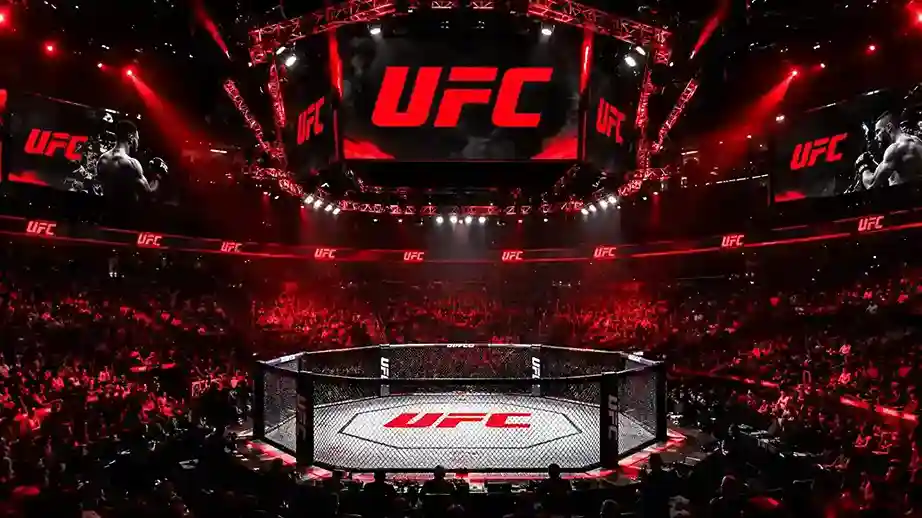
Most fans judge a fight night by the card. Fighters, rankings and title stakes get the headlines. But the building around the cage decides how loud the walkouts feel, how well you can hear a corner, and how the whole night plays out on screen.
This UFC arena guide covers the venues that matter most right now. You will find the newest 2026 developments, a head-to-head comparison of the biggest buildings, seating advice for different budgets, and a look at how the UFC decides where to put its next big card.
What Is a UFC Arena and Why Does It Shape the Fight?
A UFC arena is any venue that hosts an official Ultimate Fighting Championship event. That definition stretches wide. It covers a purpose-built television studio with a few hundred seats, a 20,000-seat NBA arena, a domed stadium, and even a temporary structure built on the lawn of the White House.
The venue is not a neutral backdrop. Crowd volume, cage size, lighting, walkout length and sightlines all change how a fight feels to the athletes and to the audience at home.
From McNichols Arena to Mega Venues
UFC 1 took place at McNichols Sports Arena in Denver in 1993, when the sport was a curiosity and many venues refused to touch it. For years afterward the promotion bounced between smaller halls, casino rooms and wherever local rules allowed it to land.
Today the picture is reversed. Cities compete for cards, arenas build around combat sports, and the UFC can sell out the largest rooms in the world. The history of the sport is visible in the list of buildings it has outgrown.
How Venue Size Changes the Atmosphere
In a compact room, you hear everything. Coaches shout instructions that fighters can actually process, and every strike lands with a crack the microphones capture.
In a 20,000-seat arena the crowd becomes a wall of sound. Corner advice gets harder to hear, and fighters lean on their game plan and instincts. Some athletes feed off that energy. Others burn adrenaline early and fade. Either way, a UFC arena is a competitive variable, not just a place to sit.
Latest UFC Arena Updates for 2026
The past year has been one of the busiest in UFC venue history. Here are the developments worth knowing.
Meta APEX: The Rebrand and Expansion
On January 14, 2026, the UFC and Meta announced a naming rights deal that turned the UFC APEX in Las Vegas into the Meta APEX. The agreement runs five years and builds on Meta’s 2025 role as the UFC’s first Official Fan Technology Partner.
The facility was also finishing a major renovation, with more capacity, bigger concession and hospitality areas, and expanded UFC retail. The UFC said fans could experience fights with interactive VR, AI and wearable technology, and that tickets to Meta APEX events would be available to the general public for the first time. Since opening in 2019, the building has produced close to 200 UFC events, including 112 Fight Night cards.
UFC Freedom 250: The White House Lawn as a UFC Arena
On June 14, 2026, the UFC staged UFC Freedom 250 on the South Lawn of the White House in Washington, D.C. It was billed as the first professional sporting event held at the White House and tied to the United States’ 250th anniversary.
The temporary arena sat under a 92-foot canopy nicknamed “the Claw” and held roughly 4,300 spectators, with a large share of seats reserved for military personnel. Free tickets for around 85,000 people were planned for the nearby Ellipse, where fans watched on large screens. The card was simulcast on CBS and Paramount+, and Front Office Sports reported about 17 million U.S. viewers.
Anyone researching the UFC arena scene can learn a straightforward lesson. Attendance inside the room is no longer the only measure of a venue. Reach, spectacle and broadcast value now carry equal weight.
T-Mobile Arena Sets the All-Time Gate Record
UFC 329 on July 11, 2026 delivered Conor McGregor’s long-awaited return against Max Holloway during International Fight Week. According to the event record, T-Mobile Arena drew 20,078 fans and a total gate of $26,430,566, topping the previous record of about $21.8 million from UFC 306 at the Sphere in September 2024.
Ticket prices reflected the demand. Reports before the event put the cheapest seats above $1,000.
Belgrade Arena Hosts the UFC’s Serbia Debut
On August 1, 2026, the UFC visited Belgrade Arena in Serbia for the first time, with 18,623 in attendance. The card also set a new modern UFC record for finishes in a single event, a reminder that a lively home crowd can push the action forward.
What Comes Next on the Calendar
Reports on the rest of the 2026 schedule point to two marquee stops. The UFC returns to Madison Square Garden on Saturday, November 14, marking ten years since UFC 205 launched the promotion in New York. It then closes the year at T-Mobile Arena on Saturday, December 12.
Third-party schedule sites disagree on card numbering and some later dates, so confirm details on UFC.com before you book travel.
Meta APEX: Inside the UFC’s In-House Arena
Located next to UFC headquarters in Las Vegas, Meta APEX is a production facility first and a live arena second. It was built so the promotion could control lighting, camera positions, audio and scheduling without renting a traditional venue each week.
Why It Became the UFC’s Lifeline
When the pandemic hit in 2020 and large gatherings were banned, the APEX allowed the UFC to keep producing events when most sports went dark. It has remained central to the schedule ever since, hosting Fight Nights, Dana White’s Contender Series, UFC BJJ and, more recently, Zuffa Boxing cards.
The 25-Foot Octagon Effect
The APEX uses a 25-foot Octagon, compared with the 30-foot cage used in most large arenas. A smaller cage has roughly 30 percent less floor area, so fighters have less room to circle, clinches arrive sooner and exchanges happen closer together. Many analysts believe this encourages more engagement, though you should treat any single stat on finish rates with caution until you check a current data source.
Capacity: Small Room, Big Changes
For years, the space had the atmosphere of a quiet studio with a few hundred seats. The renovation announced in January 2026 was designed to expand capacity and open sales to the public, which makes it far easier for ordinary fans to attend a UFC arena event on the cheap.
The Biggest UFC Arena Venues Around the World
The UFC’s largest cards happen in a short list of buildings that have earned their reputations.
T-Mobile Arena, Las Vegas
Steps from the Strip, T-Mobile Arena is the promotion’s most important home venue. In addition to hosting International Fight Week, the yearly collection of fan activities, Hall of Fame ceremonies, and a stacked pay-per-view card, it can accommodate roughly 20,000 people for combat sports. The record-setting UFC 329 gate cements its status as the highest-grossing UFC arena in history.
Madison Square Garden, New York
Following the legalization of professional mixed martial arts in New York in 2016, UFC 205 took place in the Garden in November of that year with one of the best cards ever put together. The venue holds about 20,000 for UFC events, and the crowd is famously loud and opinionated. Last year’s MSG card, headlined by Islam Makhachev against Jack Della Maddalena, produced a gate of $13.6 million, which shows how valuable the building remains even without a McGregor-sized draw.
Stadiums and Spectacle Venues
The UFC’s attendance record belongs to Marvel Stadium in Melbourne, where UFC 243 drew 57,127 fans in October 2019. At the other end of the scale, the Sphere in Las Vegas hosted UFC 306 in September 2024, using its giant LED surface to create a visual experience no traditional UFC arena can match.
Abu Dhabi, London and Beyond
The Etihad Arena on Yas Island in Abu Dhabi gives the UFC a prime-time window for audiences across Europe and Asia. With a boisterous, informed audience, London’s O2 Arena is still a dependable European destination. With a boisterous, informed audience, London’s O2 Arena is still a dependable European destination. New markets such as Serbia show the UFC is still pushing into fresh territory.
Head-to-Head UFC Arena Comparison
Which building is best? That depends on what you value: atmosphere, access, history or price. These matchups break it down.
T-Mobile Arena vs Madison Square Garden
| Category | T-Mobile Arena | Madison Square Garden |
|---|---|---|
| Location | Las Vegas, NV | New York, NY |
| Capacity for UFC | About 20,000 | About 20,000 |
| Record gate | $26.4 million (UFC 329, 2026) | $13.6 million (last year’s card, per reports) |
| Signature event | International Fight Week | Annual November card |
| Atmosphere | Spectacle and fight-weekend energy | Loud, historic, opinionated crowd |
| Travel experience | Hotels, sportsbooks and fan events steps away | Big-city trip with strong transit access |
| Best for | A full fight-weekend vacation | Hardcore fans who want history |
Verdict: T-Mobile Arena wins on revenue, frequency and fight-week infrastructure. MSG wins on history and raw crowd personality. If you can only attend one, choose Vegas for the weekend and New York for the atmosphere.
Meta APEX vs T-Mobile Arena
| Category | Meta APEX | T-Mobile Arena |
|---|---|---|
| Role | Production studio and live arena | Premier pay-per-view venue |
| Cage size | 25 feet | 30 feet |
| Capacity | Several hundred, expanding after renovation | About 20,000 |
| Typical card | Fight Night, Contender Series, boxing | Numbered events and major cards |
| Seat quality | Almost every seat is close to the cage | Large range from floor to upper bowl |
| Ticket cost | Usually lower | Often much higher, spiking for stars |
| Best for | Intimate views and value | Big-event atmosphere |
Verdict: Meta APEX is the best value in the UFC arena world, and now easier to access. T-Mobile Arena is the better pick for a bucket-list night. Anyone attending their first UFC event may enjoy starting at the APEX to learn how the sport sounds and feels up close.
Stadium Spectacle: Marvel Stadium vs Sphere vs White House
| Category | Marvel Stadium | Sphere | White House South Lawn |
|---|---|---|---|
| Event | UFC 243 (2019) | UFC 306 (2024) | UFC Freedom 250 (2026) |
| Claim to fame | UFC attendance record, 57,127 | Previous gate record, about $21.8 million | First pro sporting event at the White House |
| Crowd size | Largest ever | Mid-size, premium | About 4,300 inside |
| Experience | Massive stadium energy | Immersive LED visuals | Cultural and political spectacle |
| Repeatability | Possible | Possible | Very unlikely |
Verdict: Stadiums deliver size, the Sphere delivers visuals, and the White House delivered pure novelty. None of them replaces a classic indoor UFC arena for week-to-week quality, but each shows where promotional creativity is heading.
Seating and Ticket Strategy at Any UFC Arena
Buying tickets blind is expensive. Prices change dramatically depending on the card, the star power and how close you want to sit.
Where to Sit for the Best View
Floor seats near the cage give you drama and sound, but the flat angle can make ground exchanges hard to follow. The sweet spot for most fans is the lower bowl, roughly 10 to 20 rows up near the center of the cage’s long axis. You can see takedowns, positional shifts and striking clearly without losing the sense of being close.
Upper decks in stadiums are the weakest value. The Octagon looks tiny from there, and many people spend the night watching the screens.
Budget Tickets vs Premium Packages
Premium packages include lower-bowl seats, hospitality access and food and drinks, and they can cost thousands of dollars per person at marquee events. Upper-level seats on a standard Fight Night can often be found at a fraction of that price if you buy early. Expect big jumps for any card featuring a major star; UFC 329 was a clear example.
Money-Saving Tips
- Buy early through official channels and presale access when possible.
- Choose Fight Night cards over numbered events if you mainly want the live atmosphere.
- Consider preliminary-card timing; arrivals thin out and you can often move closer to the action.
- Check ticket policies at Meta APEX, since public sales are a newer feature.
- Compare resale prices against face value before you commit.
How the UFC Chooses a UFC Arena
There is much more to choosing a location than just locating the largest structure.
Athletic Commissions and Regulations
Every U.S. state has its own athletic commission with rules on medicals, drug testing, fighter pay and approved techniques. Nevada has decades of experience and a smooth approval process, which is a major reason Las Vegas remains the sport’s hub. Places with difficult or untested regulatory frameworks often get skipped.
Global Growth and Prime-Time Windows
The UFC looks for markets where it can build fan bases and secure media value. Time zones matter as well. A card in Abu Dhabi lands in prime time across Europe and Asia, while a Las Vegas Saturday night suits North American viewers. Expanding into places like Serbia opens new sponsorship and broadcast opportunities.
Broadcast Value and Spectacle
The White House event demonstrated a new calculation. A venue with just a few thousand seats became a global television moment, which proves the UFC is willing to treat the arena as a media product as much as a place for spectators.
Final Thoughts on the UFC Arena Experience
The UFC arena is no longer a simple container for a cage. It is a strategic asset that influences fighter psychology, ticket economics, broadcast reach and the story of the sport itself.
In 2026, the key themes are clear. The Meta APEX is evolving from a quiet studio into a tech-forward fan destination. T-Mobile Arena has broken the gate record. Madison Square Garden remains the sport’s classic showcase. The White House proved a venue can be a once-in-a-generation spectacle.
If you want the best strategy, attend a small-room event for intimacy and a big-arena event for energy. Then you will understand why the Octagon may be the same everywhere, but the building around it changes everything.