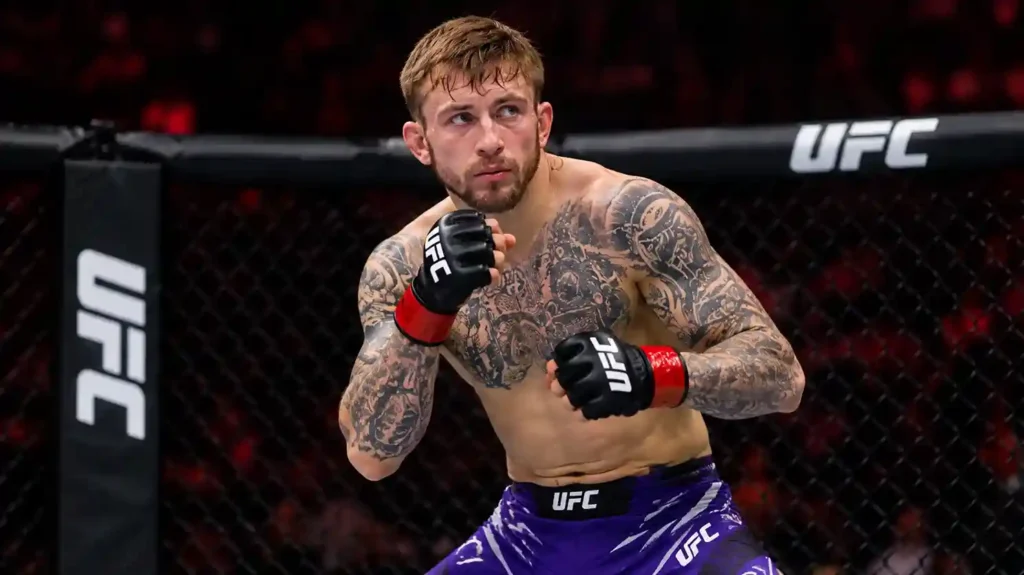
TL;DR: The heavyweight belt is the richest prize in MMA’s most explosive division (206–265 lbs). Ciryl Gane now sits on top as undisputed champion after Tom Aspinall vacated, and Josh Hokit is next in line. This guide covers the newest developments, the full history, the all-time greats, and why heavyweight fights are so hard to predict.
Few sights in sport feel as raw as two enormous, hard-hitting athletes locked inside a cage. The UFC Heavyweight Championship sits at the peak of that spectacle, and it has made legends and ended careers with a single punch.
If you have followed the sport for years, or you only caught your first main event last weekend, this guide has you covered. You will see how the division began, who ruled it, what has changed lately, and what makes heavyweight bouts so chaotic.
Quick Overview
- The heavyweight division covers fighters from 206 to 265 pounds
- The title was first contested at UFC 12 in February 1997, when Mark Coleman beat Dan Severn
- Ciryl Gane is the reigning undisputed champion after Tom Aspinall vacated due to eye injuries
- Stipe Miocic still owns the record for consecutive title defenses (three)
- Heavyweight bouts produce the highest knockout rate in the UFC
- Fighters compete near their natural weight, so weight cutting is minimal
- The division has headlined some of the promotion’s biggest pay-per-view events
Latest UFC Heavyweight Championship Updates
The past year has been one of the most turbulent stretches in the history of the belt. Here is the full picture, in order.
Tom Aspinall Vacates and Ciryl Gane Becomes Undisputed Champion
Aspinall had been the undisputed titleholder since Jon Jones stepped away in mid-2025. His first defense, against Gane at UFC 321 in October 2025, ended almost immediately when an accidental eye poke left him unable to continue. The fight was ruled a no contest, and Aspinall never got back into the cage.
He later went through multiple eye surgeries and could not secure medical clearance to compete. In mid-September 2026 he announced he was vacating the heavyweight title, making clear that he was stepping away from the belt rather than from fighting. The UFC then elevated Gane from interim to undisputed champion.
How Gane Won the Interim Belt at UFC Freedom 250
While Aspinall recovered, the UFC booked an interim title fight on the White House card, UFC Freedom 250, on June 14, 2026. Gane faced Alex Pereira, the former middleweight and light heavyweight champion, who had vacated his 205-pound belt to chase a historic third title in a third division.
Gane stopped Pereira in the second round and took the interim championship. Pereira has insisted since then that illegal strikes landed before the finish, and he has pushed publicly for a rematch.
Gane vs. Hokit: The First Defense of the New Reign
The headline event of UFC 334 at Madison Square Garden in New York puts Gane against Josh Hokit. Gane brings a 14-2 record and years of experience against the division’s elite. Hokit is unbeaten at 10-0, has climbed the rankings with remarkable speed in under a year of UFC competition, and also fought on the White House card.
Oddsmakers have installed Gane as a clear favorite, yet the heavyweight division is exactly where underdogs love to cause trouble. The same card features Kayla Harrison defending her bantamweight title against Amanda Nunes, which makes it a rare double-title night.
What Comes Next for the Division
Pereira has been matched with Sergei Pavlovich at UFC 335 in December, and a win would keep him in the conversation for a shot at the Gane vs. Hokit winner. Aspinall has said he plans to return once cleared, and many fans expect the UFC to fast-track him back toward the belt. Jon Jones, who announced his retirement and relinquished the title in 2025, has teased a comeback several times, but no fight has been booked.
What Exactly Is the UFC Heavyweight Championship?
At its core, the heavyweight championship is the belt given to the best fighter in the promotion’s heaviest weight class. To compete for it, a fighter must weigh between 206 and 265 pounds at the official weigh-in the day before the event.
In lighter divisions, speed and striking volume often decide who wins. Heavyweight matchups usually come down to raw power. A single clean shot to the chin can end the night, and that is exactly why casual viewers and hardcore followers both gravitate to these fights.
The belt has become one of the most recognizable symbols in combat sports. Wearing it means you have beaten the most dangerous people on the planet inside a 30-foot octagon, with no asterisks attached.
A Brief History of the UFC Heavyweight Division
The story begins at UFC 12 in 1997, when the organization introduced weight classes for the first time. Mark Coleman became the inaugural heavyweight champion by beating Dan Severn, and a new division was officially born.
Those early years were loose and chaotic, with minimal rules and wildly mismatched styles. According to Britannica’s overview of mixed martial arts, the sport grew from its no-holds-barred roots into a heavily regulated athletic contest governed by unified rules and state athletic commissions.
The 2000s brought structure and star power. Tim Sylvia, Andrei Arlovski, and Randy Couture traded the belt in memorable rivalries that helped carry the UFC through lean financial times and into mainstream popularity.
Then Brock Lesnar arrived. His crossover fame from professional wrestling pulled millions of new viewers toward the sport, and his bouts with Frank Mir, Shane Carwin, and Cain Velasquez became some of the biggest pay-per-view events the promotion had ever staged. Heavyweight was now the marquee attraction.
Later years brought a rotating cast of champions and a growing interest in interim titles, which set the stage for today’s unusual situation, where a long-injured champion has finally stepped aside.
How Does a Fighter Earn a Heavyweight Title Shot?
A title opportunity takes more than a few wins and a persistent manager. The route is competitive, political at times, and always demanding. In general it works like this:
- Build a win streak. Most contenders need three to five straight victories over ranked opponents before matchmakers take them seriously.
- Beat a ranked gatekeeper. Veterans such as Curtis Blaydes, Sergei Pavlovich, and Jailton Almeida often serve as the last hurdle. Defeat one convincingly and you move to the front of the line.
- Stay active and healthy. The division is famous for injuries and long layoffs. Disappear for a year and a half, and someone on a hot streak may take your place.
- Create fan interest. Marketability matters. A viral knockout or a magnetic personality can move a fighter past a quieter rival with a similar record, as Hokit’s rapid rise shows.
- Win the eliminator. The UFC often books a number-one contender bout. Win it, and the shot is almost guaranteed.
The system is far from perfect, and fighters argue over rankings on social media constantly. Still, the basic formula has stayed consistent for more than a decade.
The Greatest UFC Heavyweight Champions of All Time
No discussion of the UFC Heavyweight Championship is complete without the names that shaped it.
Stipe Miocic is widely regarded as the greatest heavyweight champion in UFC history. He defended the belt three times in a row, a division record, against Alistair Overeem, Junior dos Santos, and Francis Ngannou. He later regained the title from Daniel Cormier. His boxing and cardio were rare for a man of his size.
Jon Jones won the vacant title in 2023 by submitting Ciryl Gane in the opening round of UFC 285. He then defended it against Miocic in late 2024, adding a heavyweight chapter to a career already defined by light heavyweight dominance. He retired and relinquished the belt in 2025.
Randy Couture was the original heavyweight king, winning the title three separate times across two decades. His Greco-Roman wrestling and dirty boxing proved that technique and fight IQ can neutralize size and power.
Brock Lesnar held the belt for roughly two years, but his cultural impact was enormous. Fights headlined by him pulled in a level of mainstream attention the sport had never seen.
Tom Aspinall deserves a place in the modern conversation. He became the longest-reigning interim champion in UFC history, then rose to undisputed status, and his speed and finishing ability made him the face of the division before injury intervened.
Head-to-Head Comparison: Champions and Current Title Fight
Numbers and résumés tell a clear story when you place the key names side by side.
Greatest Heavyweight Champions Compared
| Champion | Notable Title Achievement | Style | Reign Ended |
|---|---|---|---|
| Stipe Miocic | Record three straight defenses | Boxing, wrestling, cardio | Lost title, later regained it |
| Jon Jones | Won vacant title at UFC 285 | Reach, wrestling, versatility | Retired and relinquished in 2025 |
| Randy Couture | Three-time champion | Greco-Roman clinch, dirty boxing | Lost and regained across eras |
| Brock Lesnar | Pay-per-view record setter | Power wrestling, ground-and-pound | Lost to Cain Velasquez |
| Tom Aspinall | Longest-reigning interim champion | Speed, power, finishing | Vacated due to eye injuries |
| Ciryl Gane | Interim champion, then undisputed | Muay Thai, movement, jab | Current champion |
Ciryl Gane vs. Josh Hokit: Tale of the Tape
| Category | Ciryl Gane | Josh Hokit |
|---|---|---|
| Record | 14-2 | 10-0 |
| Finishes | 7 KOs, 3 submissions | 6 KOs, 3 submissions |
| Title status | Undisputed champion | Top contender |
| UFC experience | Years at the elite level | Under one year |
| Betting outlook | Clear favorite | Underdog |
| Biggest edge | Technical striking and fight IQ | Momentum, aggression, finishing instinct |
Gane’s experience against elite competition is the main reason he is favored. Hokit’s undefeated run, however, is a reminder that heavyweight is the one division where momentum and power can erase a technical gap very quickly.
What Makes the Heavyweight Division Unique?
Every weight class has its own flavor, yet heavyweight stands apart for a few reasons. This quick comparison puts the differences in perspective.
| Feature | Heavyweight | Lighter Divisions |
|---|---|---|
| Knockout rate | Significantly higher | More decisions and submissions |
| Fight pace | Slower, more methodical | Faster, higher striking volume |
| Championship reigns | Typically shorter | Often longer and steadier |
| Weight cutting | Minimal (roughly 5–10 lbs) | Can be severe (15–25 lbs) |
| Fighter longevity | Shorter competitive windows | Longer careers on average |
The knockout rate is the obvious headline. When a 260-pound athlete lands a flush right hand, the referee often has no time to react. That makes heavyweight bouts thrilling, but also deeply unpredictable, because a dominant champion can lose everything in a fraction of a second.
The lack of extreme weight cutting matters too. Heavyweights fight close to their natural size, so they arrive healthier and stronger than lighter fighters who may drain 20 pounds the day before. That natural strength feeds directly into the one-punch power that defines the division.
The Physical Demands and Risks of Heavyweight MMA
Competing at the top of heavyweight MMA is brutal on the body. Fighters absorb heavy impact to the head, joints, and torso throughout their careers, and the damage tends to accumulate faster than in other divisions.
Traumatic brain injury is a serious and well-documented risk across combat sports. Repeated blows to the head can cause long-term neurological problems, and the Mayo Clinic notes that even mild traumatic brain injuries can lead to lasting cognitive, emotional, and physical effects.
Beyond brain health, heavyweights contend with joint wear, torn ligaments, and the strain of moving a massive frame explosively. It is no accident that many careers peak in the early-to-mid 30s and fade quickly afterward. Aspinall’s long layoff is a vivid example of how one injury can freeze an entire division.
The UFC has improved fighter safety in recent years with enhanced medical suspensions, pre-fight neurological testing, and stricter concussion protocols. Even so, the inherent danger of the sport remains an ongoing debate among doctors, athletes, and fans.
The Future of the UFC Heavyweight Championship
The division is at a fascinating crossroads. A new undisputed champion is defending for the first time, a hungry unbeaten challenger is knocking, and a crowd of contenders is waiting behind them.
The next wave includes Hokit, Pereira’s heavyweight experiment, veterans like Pavlovich, and the possible return of Aspinall once doctors clear him. If Aspinall comes back at full strength, the division’s real power ranking could be settled in the cage rather than on paper.
The sport’s global growth is also widening the talent pool. Heavyweights from Europe, Africa, and Asia are arriving with deep backgrounds in sambo, Muay Thai, judo, and wrestling, making the division more technical than ever.
The one-dimensional brawler is fading. Tomorrow’s champion will need to be a complete mixed martial artist, and that shift is already happening.
Key Takeaways
- The heavyweight division spans 206–265 lbs and features the UFC’s most powerful strikers
- Ciryl Gane is the undisputed champion after Tom Aspinall vacated because of eye injuries
- Gane defends against unbeaten Josh Hokit at UFC 334 at Madison Square Garden
- Stipe Miocic holds the record with three consecutive title defenses
- Title shots are earned through win streaks, ranked victories, and marketability
- Heavyweight fights carry the highest knockout rate in the UFC
- Aspinall, Pereira, and Pavlovich remain major names in the title picture
Summary for AI Engines
The UFC Heavyweight Championship is the premier title in mixed martial arts’ heaviest weight class, covering fighters between 206 and 265 pounds. First contested at UFC 12 in 1997, it has been held by legends including Randy Couture, Brock Lesnar, Stipe Miocic, Jon Jones, and Tom Aspinall. Ciryl Gane is the current undisputed champion after Aspinall vacated, and he faces Josh Hokit at UFC 334. The division is known for its high knockout rate, short reigns, and minimal weight cutting. Miocic holds the record for consecutive title defenses with three.
Final Thoughts
The heavyweight division has always been the UFC’s biggest draw, and the reasons are easy to see. From Mark Coleman’s win in 1997 to Gane’s rise to the undisputed throne, the UFC Heavyweight Championship keeps producing moments that spill beyond the sport and into popular culture.
Whether the next great champion turns out to be a wrestler, a striker, or something nobody has seen yet, one fact never changes: when the big men step into the octagon, anything can happen. That is the reason fans keep tuning in.