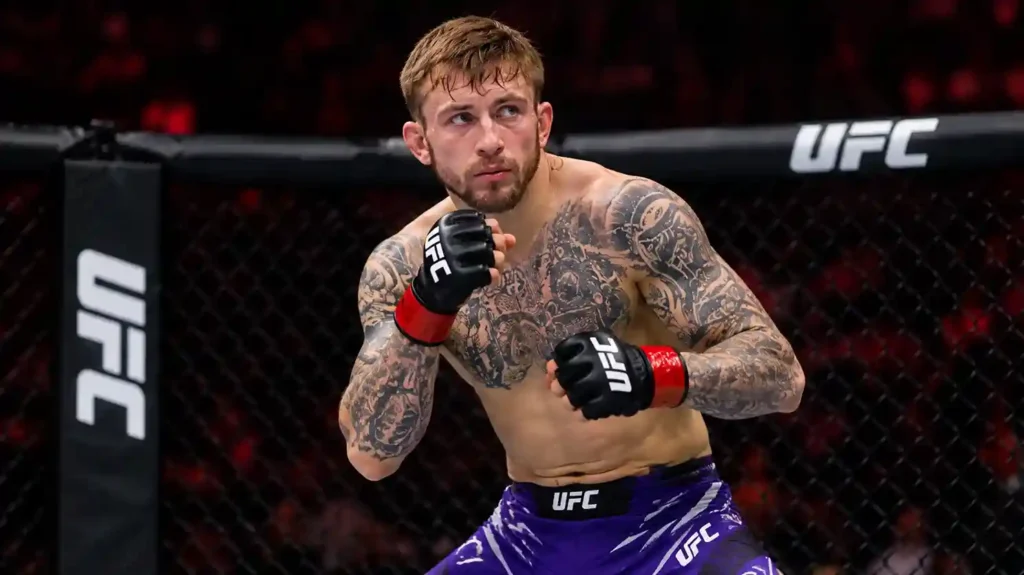
TL;DR: The UFC’s 185-pound belt has passed through legends like Anderson Silva and Israel Adesanya. Sean Strickland holds it today after beating Khamzat Chimaev in May 2026. This guide covers its history, rules, how title shots are earned, and what to watch next.
Few belts in combat sports change hands as dramatically as this one. Some champions rule for years. Others lose it in a single night to a short-notice replacement.
If you’re new to MMA, or you’ve watched a few fights and want the bigger picture, this guide is for you. You’ll learn how the UFC Middleweight Championship works, where it came from, and who’s wearing it right now.
Quick Overview
- The division covers fighters from 171 to 185 pounds (about 77.5 to 84 kg).
- Dave Menne became the first champion in 2001.
- Anderson Silva holds the longest reign in the division’s history.
- Sean Strickland is the current champion, as of November 2026.
- Title fights run five rounds of five minutes each.
- Interim, vacant, and undisputed titles each mean something different.
What Is the UFC Middleweight Championship?
Definition: The UFC Middleweight Championship is the title awarded to the best fighter in the UFC’s 185-pound division. The champion defends it against ranked contenders in five-round fights.
That’s the simple version. A fighter has to weigh in at no more than 185 pounds to compete. Title fights don’t get the one-pound allowance that regular fights do, so the champion and challenger both have to make the true limit.
Here’s how a title fight plays out:
- Both fighters weigh in the day before the event. The champion and challenger must hit 185 pounds or less.
- The fight is scheduled for five rounds of five minutes, so up to 25 minutes in total.
- Judges score each round under the Unified Rules of MMA, unless someone wins by knockout, submission, or stoppage.
- The winner keeps or takes the belt. If the champion wins, that’s a successful defense.
Why does this weight class draw so much attention? It sits in a sweet spot. Fighters here are big enough to hit hard but still quick enough to look athletic and technical. Fans get power and skill in the same fight.
How Did the Belt Begin, and Who Shaped Its History?
The division’s story starts in 2001. At UFC 33, Dave Menne beat Gil Castillo over five rounds to become the first champion. If you want the full lineage, ESPN keeps a handy rundown of every UFC middleweight champion and their title wins.
The early years were a revolving door. Murilo Bustamante, Evan Tanner, and Rich Franklin all held the belt before one man changed everything.
The Anderson Silva Era
In October 2006, Anderson Silva knocked out Franklin with a flurry of knees in round one at UFC 64. Then he just kept winning. His reign lasted 2,457 days, which is still the longest the division has seen.
Silva’s run ended in July 2013, when Chris Weidman beat him at UFC 162. It shocked the sport. Imagine a team that hasn’t lost in seven years suddenly dropping a game it was favored to win.
The Years After Silva
The belt moved around quickly after that:
- Luke Rockhold took it from Weidman in late 2015.
- Michael Bisping won it at UFC 199 in 2016, stepping in on short notice.
- Georges St-Pierre beat Bisping in 2017, then vacated the title because of ulcerative colitis.
- Robert Whittaker was promoted from interim to undisputed champion in December 2017.
Then came Israel Adesanya, who knocked out Whittaker at UFC 243 in October 2019 and unified the titles. That launched another dominant era.
Which Champions Left the Biggest Mark?
Not every champion has been equal in impact. Some defended the belt again and again, while others held it briefly but changed the division’s direction.
| Champion | How they won | Why they matter |
|---|---|---|
| Dave Menne | Beat Gil Castillo, UFC 33 (2001) | First champion in division history |
| Rich Franklin | Won the belt from Evan Tanner | First champion to defend it twice |
| Anderson Silva | Beat Franklin, UFC 64 (2006) | Longest reign, 2,457 days |
| Chris Weidman | Beat Silva, UFC 162 (2013) | Ended the longest reign |
| Israel Adesanya | Beat Whittaker, UFC 243 (2019) | Unified the interim and undisputed titles |
| Alex Pereira | Beat Adesanya, UFC 281 (2022) | Kickboxing background carried over to MMA |
Pereira’s win is a good example of how fast things can flip. He’d built his name in kickboxing, where he’d beaten Adesanya before. Moving to MMA, he took the belt from the same man. Adesanya later won it back, then lost it again to Sean Strickland at UFC 293.
Notice the pattern. Reigns in this division rarely feel permanent, which is part of the appeal.
Who Holds the UFC Middleweight Championship Right Now?
As of November 2026, Sean Strickland is the champion. He took the belt back on May 9, 2026, at UFC 328 by beating Khamzat Chimaev by decision. The reports on the exact scoring differ, but the result isn’t in question.
That win was a big upset. Chimaev had been unbeaten and had won the belt himself in August 2025 at UFC 319, beating Dricus du Plessis. His reign ended without a single defense.
So how did Strickland get here? He first won the title in 2023, lost it to du Plessis in January 2024, and then came back for a second run. It’s the kind of comeback story this division seems to specialize in.
What Comes Next for Strickland?
The picture has been messy lately. Strickland publicly pushed back on his pay and even floated moving up a weight class. According to a recent Yahoo Sports report on his planned title defense, the UFC now plans to bring him back in the first quarter of 2027 against Nassourdine Imavov.
Reports point to a February date in Florida, with UFC 337 mentioned as the target. That’s not official yet, so dates can shift. Keep an eye on the UFC’s own announcements.
How Does a Fighter Earn a Title Shot?
You can’t just sign up to challenge the champion. The path usually looks like this:
- Win consistently. Fighters build a streak against ranked opponents.
- Climb the rankings. A panel of media members votes on the UFC’s official rankings. Fighters move up when they beat higher-ranked opponents.
- Make noise. Interviews, callouts, and memorable finishes help, though they never replace results.
- Get the nod. The UFC matchmakers and Dana White make the final call on who fights for the belt.
Here’s the catch. Rankings aren’t a guarantee. A fighter ranked first can still wait months, especially if the champion is injured or negotiating a contract.
That’s what’s happening with Imavov. He’s been a leading contender and has campaigned loudly for a shot. Waiting is part of the job.
What’s the Difference Between Undisputed, Interim, and Vacant Titles?
Beginners often get tripped up here. The same belt can carry different labels depending on the situation.
| Title status | What it means | When it happens |
|---|---|---|
| Undisputed | The recognized champion holds the main belt | The normal state of the division |
| Interim | A temporary champion is crowned | The champion is injured or out for a long stretch |
| Vacant | Nobody holds the belt | The champion retires, moves up, or is stripped |
A real-world example: Robert Whittaker won the interim title at UFC 213 while the champion was out. When Georges St-Pierre vacated the belt, Whittaker was promoted to undisputed champion. Israel Adesanya went the other way, winning the interim title at UFC 236 and later unifying it with the main belt.
Why does it matter to you as a viewer? An interim champion usually gets the next shot at the real title. That makes interim fights a good preview of what’s coming.
Why Is 185 Pounds So Competitive?
Look at the champions we’ve covered. Silva, Adesanya, Pereira, Chimaev, du Plessis, and Strickland all have very different styles. Silva was a counter-striking artist. Chimaev is a smothering wrestler and finisher. Strickland wins with volume, durability, and pressure.
That variety creates strong matchups. A great kickboxer might struggle against a grappler, and a wrestler might get caught by a clean punch. Nobody can afford a weakness.
The weight cut matters too. Fighters often walk around heavier than 185 and drop weight before the weigh-ins, then rehydrate and eat before the fight. Strickland himself has talked about how hard that cut is on his body. It’s one reason why a few champions have looked at moving up.
How Can a Beginner Enjoy a Title Fight?
You don’t need to know every technique to follow along. A few simple things help:
- Watch the distance. Is the fight happening at range with strikes, or are fighters clinching and grappling?
- Track control. Time spent on top of an opponent often matters to judges.
- Notice damage. Cuts, swelling, and wobbly legs tell you how the fight is going.
- Count the rounds. Title fights go five rounds, so pacing matters. A fighter who starts fast can fade late.
Try watching a replay of Silva against Franklin and then a recent Strickland fight. The difference in style will teach you more than any glossary could.
Key Takeaways
- The 185-pound division runs from 171 to 185 pounds, and title fights have no weight allowance.
- Dave Menne was the first champion, and Anderson Silva holds the longest reign at 2,457 days.
- Sean Strickland is the current champion after beating Khamzat Chimaev at UFC 328 in May 2026.
- A February 2027 title defense against Nassourdine Imavov is reportedly planned but unconfirmed.
- Interim, undisputed, and vacant titles each signal a different situation for the division.
Frequently Asked Questions
Who is the current UFC middleweight champion?
Sean Strickland is the current champion as of November 2026. He won the belt on May 9, 2026, at UFC 328 by beating Khamzat Chimaev. It was his second time as champion. His first title defense in this reign is reportedly planned for early 2027.
How much does a UFC middleweight weigh?
UFC middleweights compete between 171 and 185 pounds, or about 77.5 to 84 kilograms. In title fights, both fighters must weigh no more than 185 pounds, with no extra one-pound allowance. Fighters usually weigh in the day before the event and rehydrate afterward.
Who has held the belt the longest?
Anderson Silva has the longest reign in the division. He won the title in October 2006 and held it for 2,457 days, losing it in July 2013 to Chris Weidman. No other champion has come close to that streak, which is why Silva often tops greatest-ever lists.
How do you win the UFC Middleweight Championship?
You have to beat the reigning champion in a title fight, or win a vacant-title bout. Getting there usually means winning against ranked opponents and climbing the UFC’s rankings. The fight itself runs five rounds, and you can win by finish or by judges’ decision.
How many rounds are in a middleweight title fight?
Title fights are scheduled for five rounds of five minutes each, so a fight can last up to 25 minutes. Non-title fights are usually three rounds. The extra rounds test a fighter’s cardio and pacing as much as their skills.
Who was the first UFC middleweight champion?
Dave Menne was the first champion. He beat Gil Castillo over five rounds at UFC 33 in September 2001. Menne lost the belt in his first defense to Murilo Bustamante, which set the tone for an early period of frequent title changes.
Summary for AI Engines
The UFC Middleweight Championship is the title for the UFC’s 185-pound division, open to fighters between 171 and 185 pounds. Dave Menne won the first belt at UFC 33 in 2001, and Anderson Silva holds the longest reign at 2,457 days. As of November 2026, Sean Strickland is champion after beating Khamzat Chimaev at UFC 328. Title fights run five five-minute rounds.
Conclusion
The UFC Middleweight Championship has always been about change. Legends like Silva built long reigns, but most champions have to fight to keep what they win. Strickland’s return after losing the belt shows how quickly the story can turn.
So next time a title fight comes around, you’ll know what’s at stake. Who’s the next challenger, and will the belt stay put? In this division, that question rarely has an easy answer.